
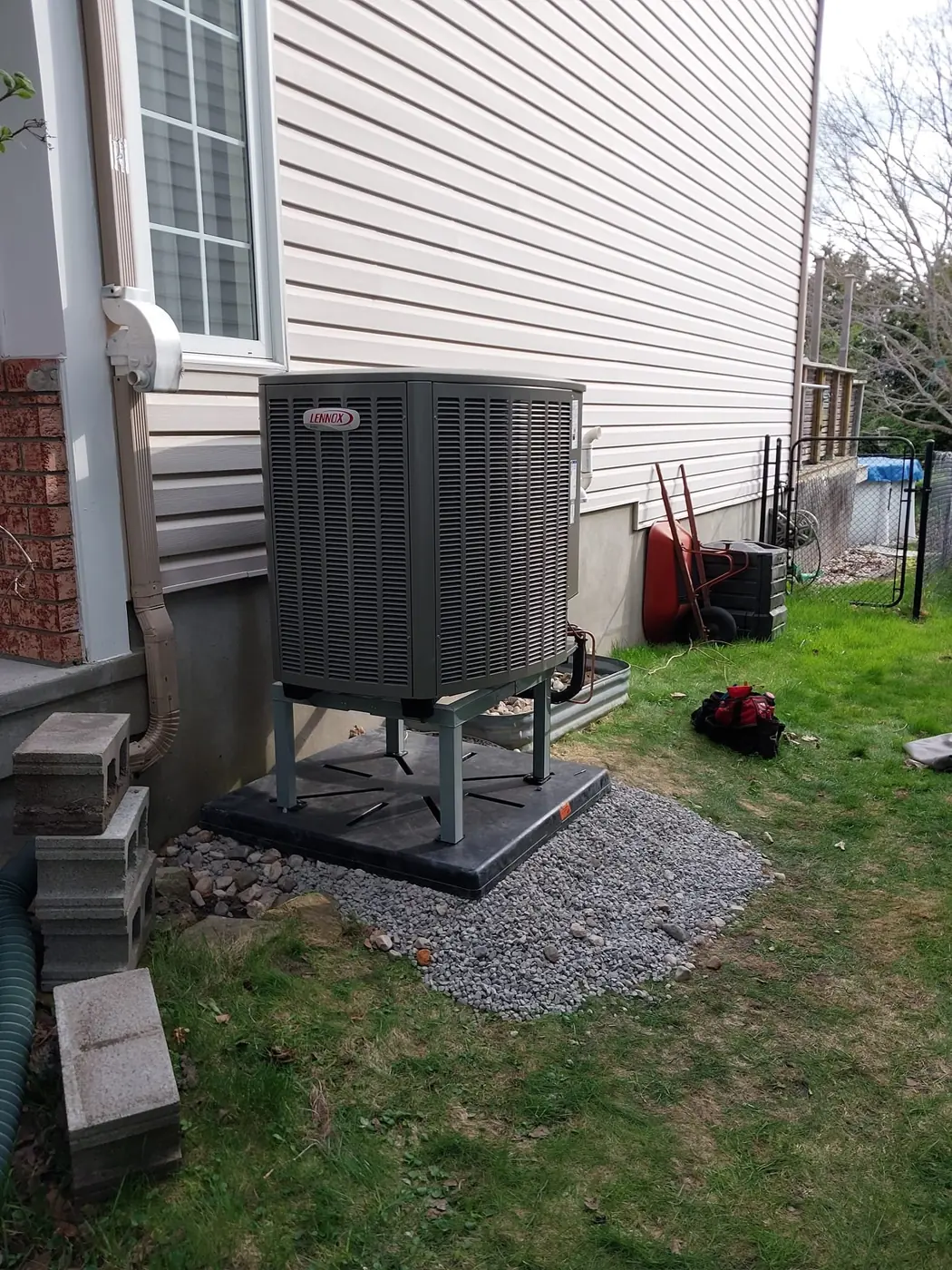
Start with the cooling problem you want to solve.
If the upstairs is uncomfortable, a noisy unit sits beside the patio or certain rooms stay humid, write those concerns down before requesting quotes. Replacing equipment with a heat pump does not by itself establish how each room will feel. Ask the installer to assess the home, the air distribution and the operating settings that contribute to the problem.
Both a central air conditioner and a heat pump can provide cooling. A heat pump also reverses its operation to provide heating. Natural Resources Canada explains that this is the same underlying heat-transfer technology homeowners already use for air conditioning. The practical comparison is therefore between complete proposed systems, rather than the familiar shape of their outdoor cabinets.
Three common replacement situations.
For a home with a functioning gas furnace and a failing central air conditioner, ask for two clearly described options: a cooling-only replacement and a compatible heat pump installation that retains the furnace. The second option needs an explanation of how the controls will choose between the heat pump and furnace. It should also identify any indoor coil or thermostat changes.
If both the furnace and air conditioner are due for replacement, widen the comparison. A new hybrid system and an all-electric design may involve different indoor equipment, backup heat and electrical work. Treat those as distinct projects.
For a home without ductwork, compare how each option will serve the rooms you actually use. A ductless heat pump may offer cooling and heating in selected zones, but placement and coverage still need a design. Avoid assuming that one indoor head will resolve every room’s comfort problem.
Decide what you want the heat pump to do in winter.
A homeowner replacing AC may want modest heating in spring and fall, more heating throughout the season, or a transition away from fuel heating. Those goals can lead to different equipment selections. Natural Resources Canada recommends sizing around the climate, the home’s heating and cooling loads, and the objective of the installation.
Ask the designer to describe the proposed heat pump’s winter role in plain language. When will backup heat operate? What is the planned changeover strategy? What happens on the coldest days? A claim that a model operates at a low outdoor temperature does not answer how much heat it will deliver to your home at that temperature.
Make the two quotes comparable.
Before deciding that one technology costs more, compare the scope. Does each quote include the furnace, electrical work, thermostat wiring and equipment support, or leave some items as allowances?
We recommend asking each contractor to show the gross installed price before rebates and list the retained equipment. Then compare the indoor and outdoor model numbers, controls, installation work and labour coverage. If an existing furnace will remain, ask how its blower, controls and condition were assessed for the proposed arrangement.
| Decision point | What to ask |
|---|---|
| Summer comfort | How does this design address our cooling load and room complaints? |
| Retained furnace | Which existing components remain, and why are they compatible? |
| Winter operation | What heating role and backup strategy are included? |
| Installation scope | What electrical, control, coil and removal work is in the price? |
| After installation | Who sets up the controls and explains operation? |
Use the rebate as a verified part of the comparison.
A heat pump incentive may affect the net project cost, but an advertised maximum is not a confirmed allowance for your home. Under Home Renovation Savings, the participating contractor must obtain pre-installation approval, and the exact proposed system must meet the applicable requirements. Confirm the route before work begins.
A rebate also does not automatically require removing a natural gas furnace. The program has rules for the complete design and existing heating source. Ask the contractor to identify which arrangement they are proposing and how it meets those rules. Our program guide keeps the current categories in one place.
Be specific about any savings estimate.
A heat pump adds an electric heating option. Whether that reduces your household’s bills depends on the equipment, your heating needs, electricity and fuel prices, and how the system is operated. Ask what assumptions support a savings estimate and whether it reflects the furnace or other equipment you already own.
Keep summer and winter claims separate. An improved cooling design does not establish annual heating savings. If someone offers a single percentage for both, request the calculation using your home’s requirements.
Request an option, then request the explanation.
An AC replacement gives you an opportunity to price a heat pump alongside an air conditioner. Ask for both where practical. Let the scope, comfort goals and winter plan guide the decision.
For Ottawa-area homes, AirZone can assess the existing equipment and explain suitable options. Our cost guide helps organize the budget.
Questions homeowners ask.
Does a heat pump provide air conditioning?
Yes. A reversible heat pump transfers heat out of the home in cooling mode and provides heating in the other direction. The proposed system still needs to be selected and installed for your home’s cooling requirements.
Do I need to replace my gas furnace when adding a heat pump?
Not always. Some compatible designs retain the existing furnace as backup. The contractor must assess the equipment match, controls, airflow, condition and program requirements before recommending that arrangement.
Is a heat pump always cheaper to run than a gas furnace?
No universal result applies. Operating cost depends on electricity and fuel prices, equipment performance, the home’s demand and the changeover strategy. Ask for a calculation using your project assumptions.
Sources behind this article.
PUT THE GUIDANCE TO WORK
Find the next step for your home.
Check the Ontario program route first, then use the buying tools to organize your questions. Ottawa-area homeowners can choose an AirZone assessment when they are ready.