
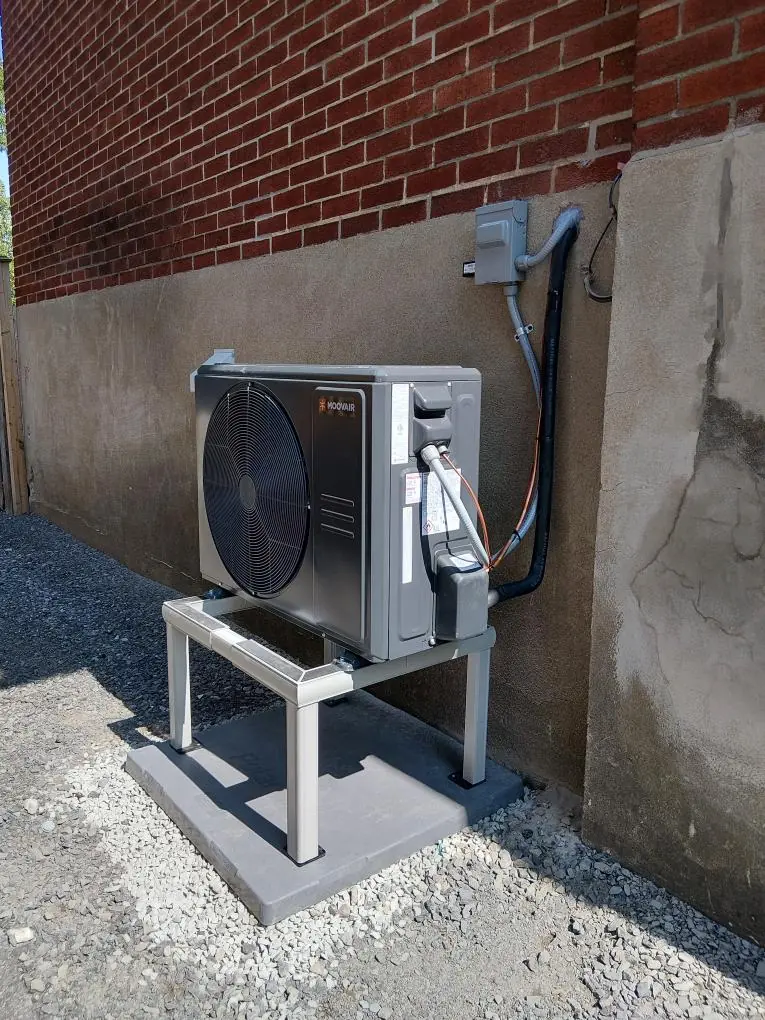
What a hybrid system actually does.
In a typical ducted hybrid setup, the heat pump replaces the outdoor air conditioner and works with a compatible indoor coil and gas furnace. The furnace moves air through the duct system and can take over heating when the controls call for gas backup.
Natural Resources Canada distinguishes the thermal balance point—the temperature where heat-pump capacity no longer covers the home’s heating load—from the economic balance point, where the cost of heat from one energy source becomes lower than the other. Those are different decisions.
Controls matter as much as the equipment.
A hybrid system needs a clear control strategy. Some systems use an outdoor-temperature lockout, some use communicating controls, and others can be configured around a contractor-selected economic or comfort target. Ask what happens during defrost, what triggers the furnace, whether the heat pump and furnace can operate at the same time, and who will adjust the switchover settings if utility rates change.
The goal is not to force the heat pump to run at every temperature. It is to make the operating logic match the home, the equipment and the homeowner’s priorities.
How the HRS natural-gas route fits.
For an eligible Enbridge natural-gas heated home, HRS currently uses $500 per ton for an eligible purchased cold-climate air-source heat pump, up to $2,000. The program allows the heat pump to work with a backup natural-gas furnace, and the furnace itself is not the rebated measure.
The contractor must be participating before the project proceeds, and pre-installation approval is part of the program sequence. Do not treat a brand name or outdoor unit by itself as proof of eligibility.
When hybrid can be a practical choice.
Hybrid can be attractive when the home already has a sound gas furnace, the electrical service has limited spare capacity, the homeowner wants to replace an aging air conditioner, or the household prefers gas backup during extreme cold. All-electric can be attractive when the home and electrical system are ready for it, the matched heat pump has suitable low-temperature capacity, and the backup strategy has been designed rather than assumed.
Neither choice should be made from square footage alone. Ask for a heating-load calculation, matched-system performance and a written control sequence.
Questions to put on the quote.
A useful hybrid quote identifies the outdoor heat pump, indoor coil, furnace, thermostat or communicating control, electrical scope, switchover strategy and program reference. It should also state whether the existing furnace is being retained and whether any warranty conditions depend on the matched combination.