
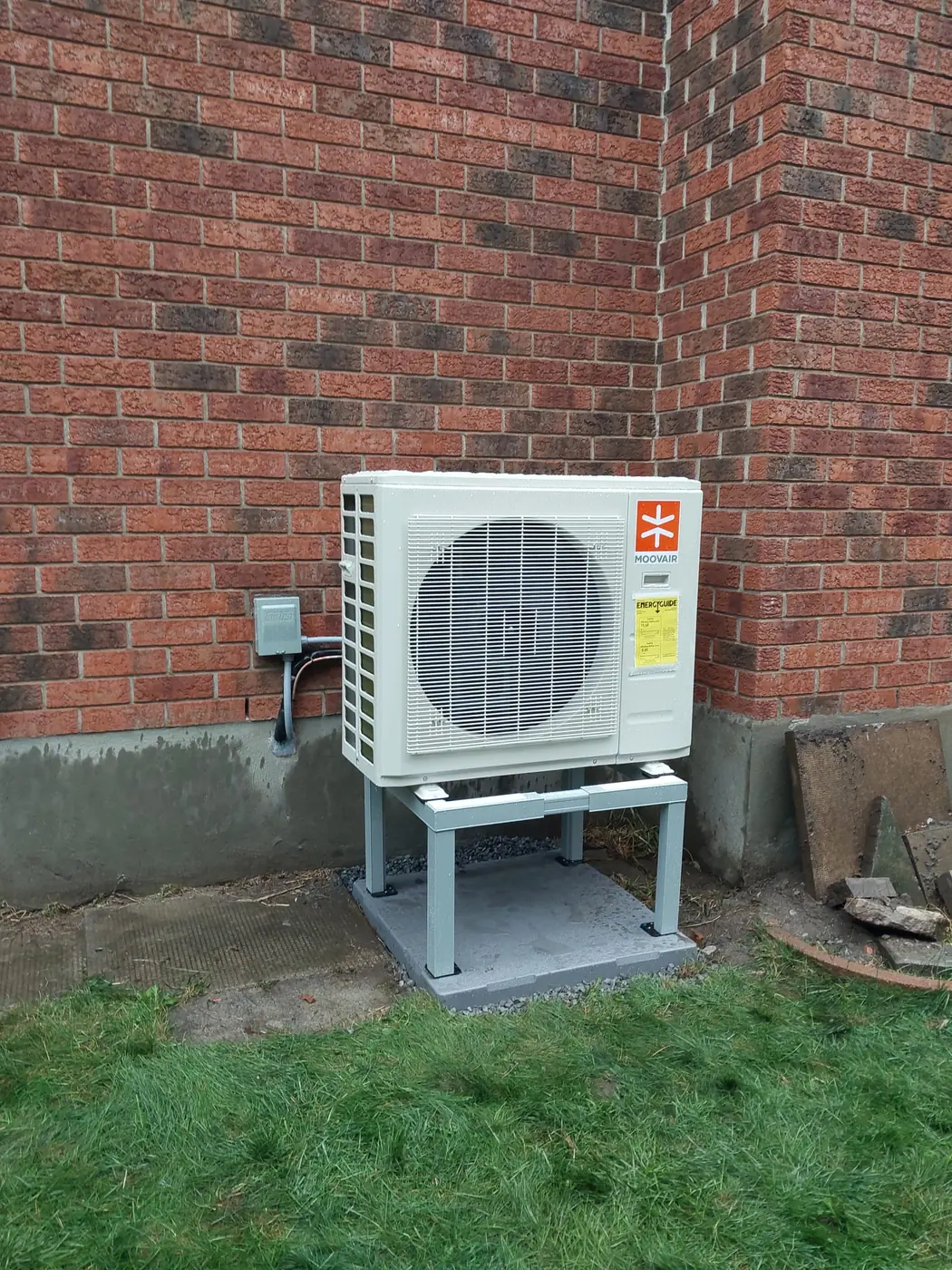
Start outside with the people who use the space
A location can look convenient on an installer’s first visit and feel less suitable once you are living with it. Point out bedroom windows, a home office, the patio, regularly used doors and a neighbour’s outdoor seating area. Explain when those spaces are occupied.
Also show the contractor anything that changes seasonally. A narrow side yard may be easy to reach in October and fill with snow in February. A path used only in summer may become the main route for winter deliveries. Planning around these details is more useful than picking the spot that makes the refrigerant piping least visible.
Ask for the proposed outdoor location to appear in the written scope. If a change becomes necessary during installation, agree on the replacement location before the unit is mounted.
A quiet brochure rating needs context
An equipment sound rating describes a particular test or operating condition. It does not promise the same experience at your bedroom window. Ask which operating condition the quoted rating represents and whether the manufacturer publishes sound information for other loads or modes.
Do not compare an indoor ductless-head rating with an outdoor-unit rating. Likewise, ask whether two specifications describe sound power or sound pressure; those are different measurements. A contractor should help you make an appropriate comparison rather than rank products using whichever number is smallest.
Your installation discussion should address both airborne sound and vibration. Describe your priorities plainly: perhaps sleeping with a nearby window open matters more than sound at a seldom-used driveway. That gives the contractor a specific concern to resolve instead of an undefined request for the “quietest” heat pump.
The support and clearances are part of the design
Manufacturer installation instructions address stable support, vibration, neighbouring properties and space around the equipment. For example, Mitsubishi’s ZUBA installation manual calls for a location that can support the unit and its vibration, while considering sound at neighbouring properties. Its requirements are model-specific; they are not a universal placement template.
Ask whether the proposal uses a ground support, wall brackets or another approved arrangement, and why that arrangement suits your house. If the unit will sit near a quiet room, ask how the chosen mounting method deals with vibration.
Required clearances depend on the exact model and surrounding obstacles. A fence, deck, roof overhang or second unit can change the layout the installer must follow. Request confirmation that the planned placement meets the current installation manual and applicable local requirements.
Follow the water through a winter day
Outdoor equipment can release water during heating and defrost. Mitsubishi’s placement guidance specifically flags driveways and walkways as potentially unsuitable because of that water. On your site walkthrough, ask where it will go and whether freezing could create a problem for people using the property.
Point out downspouts, roof edges and places where snow normally drifts. Ask the installer to explain the snow allowance and any model-approved protection. The answer should account for your property rather than use a fixed mounting height for every Ontario home.
Consider the next person who will service the unit. Will a technician have room to access it safely? Can someone reach it after a storm? A landscaped screen may look attractive, but its placement needs to preserve both operating clearances and service access.
When an existing installation starts bothering you
Record where you hear the sound, whether it is new and which operating condition appears to coincide with it. A short video taken safely can help a service team understand the complaint. Note whether the sound is outside only or can be felt through a room’s wall or floor.
Changes during winter may involve defrost, but persistent rattling, contact with ice or a sudden change deserves an inspection. Avoid loosening brackets, adjusting internal parts or building an enclosure to suppress the sound yourself.
If the system has a manufacturer-provided quiet mode, ask the installer how that setting affects available capacity and when it should be used. A setting that suits one season may not be appropriate during peak heating demand. For a new purchase, settle these questions before signing; our quote comparison guide helps you capture the answers alongside equipment and installation scope.
Questions homeowners ask.
Can a heat pump go directly below a bedroom window?
The contractor must assess the exact equipment, clearances, sound, vibration and your property’s use. A brochure sound rating alone does not establish whether that location will suit you. Discuss bedroom concerns before approving the site plan.
Can I hide the outdoor unit behind a fence?
A screen or fence must preserve the manufacturer’s operating clearances and future service access. Have the contractor review the planned dimensions before building or moving anything around the equipment.
What is the best height for a heat pump above the ground?
There is no universal height for every installation. The contractor should use the exact model’s instructions and assess snow accumulation, drainage, support and safe service access at your property.
Sources behind this article.
PUT THE GUIDANCE TO WORK
Find the next step for your home.
Check the Ontario program route first, then use the buying tools to organize your questions. Ottawa-area homeowners can choose an AirZone assessment when they are ready.