
Start with heating capacity, not the minimum operating temperature.
A manufacturer may publish a very low operating limit, but the important question is how much heat the matched system can deliver as outdoor temperature falls. Natural Resources Canada explains that heat-pump capacity generally declines with outdoor temperature and that supplementary heat may be needed below the home’s thermal balance point.
That is why a proper design compares the home’s heating load with the heat pump’s extended performance. A unit that can technically run at a very low temperature may still need backup heat if its capacity is below the building load.
COP tells you efficiency at a specific condition.
Coefficient of performance compares heat delivered with electricity consumed. A COP of 2 means the heat pump is delivering roughly twice as much heat energy as the electrical energy it is using at that test condition. COP changes with outdoor temperature, compressor speed and system configuration.
Do not copy one COP number from a brochure and treat it as a seasonal operating cost. For a hybrid system, compare the exact model’s low-temperature COP curve with your marginal electricity and fuel prices. For an all-electric system, also look at capacity retention and backup heat.
Defrost is normal—and installation details matter.
When moisture freezes on the outdoor coil, the system periodically enters a defrost cycle. The controls temporarily reverse operation so the outdoor coil can shed frost. The home may use backup heat or control strategies to maintain comfort during that cycle.
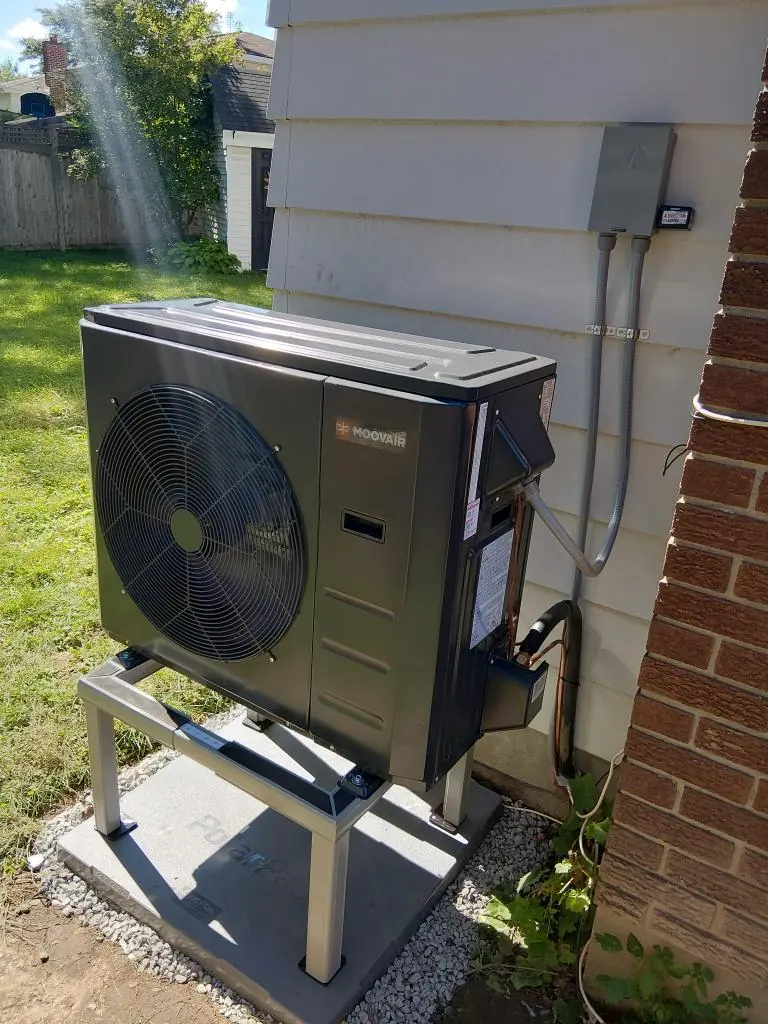
In Ottawa-area installations, drainage and snow clearance deserve attention. The outdoor unit needs a stable support and enough clearance that snow, ice and refrozen defrost water do not block airflow or bury the coil. The correct stand or wall-bracket height depends on the site and equipment instructions, not a universal number.
Backup heat is part of the design, not evidence that the heat pump failed.
Backup can be a gas or propane furnace in a hybrid system, electric resistance in an air handler, or another approved heat source. The design should state what backup is present, when it is expected to operate and how the controls transition.
An all-electric project with resistance backup can create a much larger electrical load than the compressor alone. That is one reason the electrical service needs a professional load assessment rather than a yes-or-no answer based only on the panel label.
Where to verify cold-climate performance.
For Ontario rebate eligibility, use the current program-required NRCan qualified-products list and the exact matched system. For deeper technical comparison, the NEEP cold-climate product list publishes standardized extended-performance information for many systems. Manufacturer data can add model-specific details, but it should not replace the program list when a rebate is involved.
Why square footage is not enough.
Two 1,800-square-foot homes can have very different heat loss because of insulation, air leakage, window area, orientation, additions and ductwork. NRCan recommends recognized heating and cooling load calculations and warns that both undersizing and oversizing can reduce expected savings or comfort.
Use square footage only as a conversation starter. Final equipment selection should come from the home’s load and the matched system’s performance.