
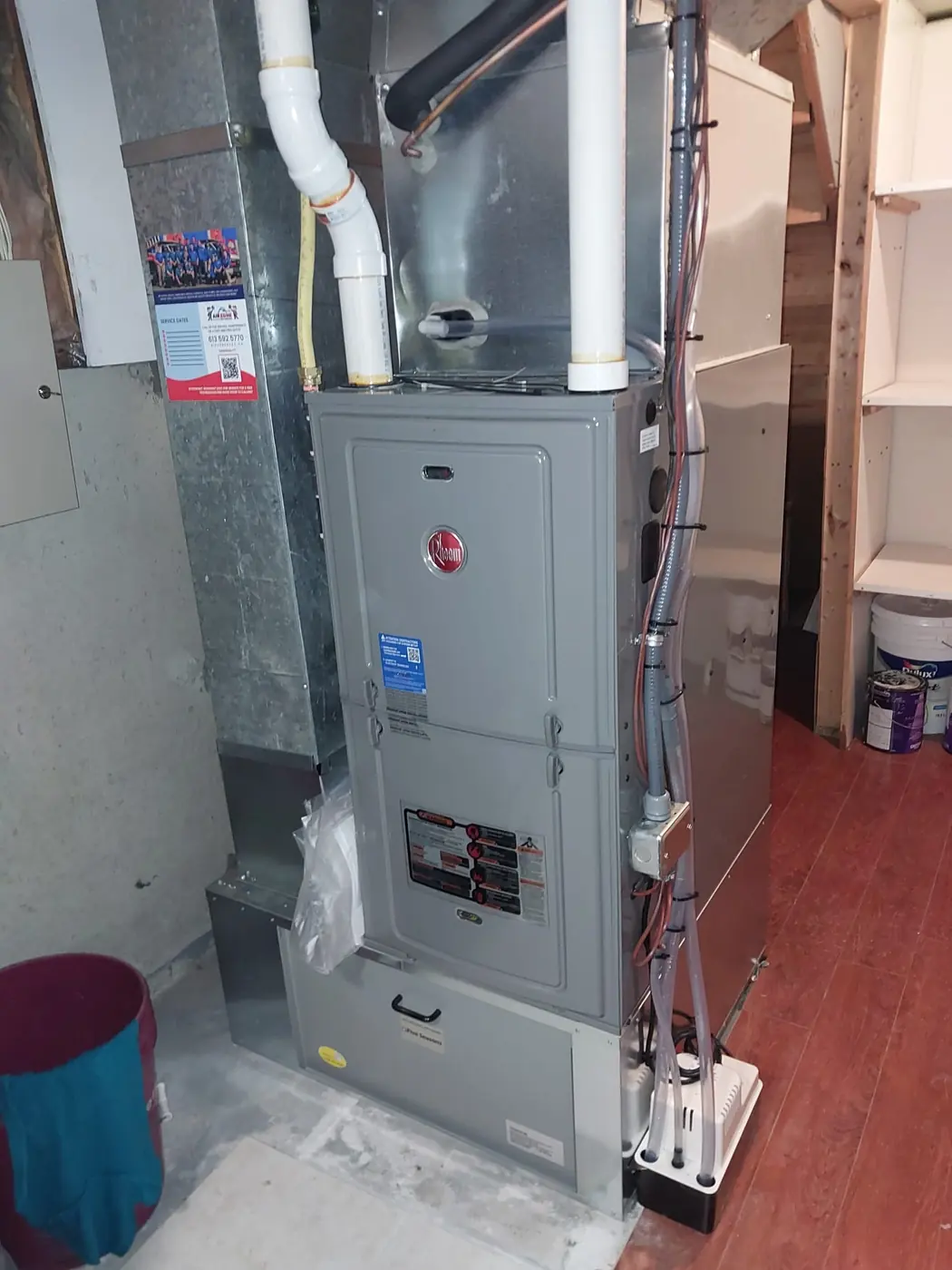
First, identify the agreement you are being offered.
Cash purchase, a financed purchase and rental can all lead to similar-looking equipment outside your home. Their agreements can be very different. With a purchase, ask when ownership transfers and whether a separate lender is involved. With rental, ask who owns each component and what happens when the stated term ends. Do not assume that years of payments automatically make the system yours.
A phrase such as “monthly home comfort plan” does not answer these questions. Request the equipment agreement, service agreement and any financing documents before choosing. If the outdoor unit, furnace and indoor coil have different owners or contracts, put those details on one page. A future repair or replacement becomes harder to plan when you cannot identify which company controls which component.
Compare the same installation before comparing payments.
A rental proposal that includes a new furnace, scheduled maintenance and an indoor coil cannot be fairly compared with a cash quote for an outdoor unit alone. Ask both providers to identify the complete equipment, electrical work, controls, removal work and installation scope. Then separate the value of included services from the cost of paying for the equipment.
Ask for the proposed system’s cash purchase price when one is available. It provides a reference point for the rental commitment. Compare the payment duration, annual increases and excluded costs.
| Question | Purchase or financed purchase | Rental |
|---|---|---|
| Who owns the system? | Confirm transfer of ownership and lender conditions. | Identify the owner and any end-of-term ownership option. |
| How is service covered? | Read equipment warranty, labour warranty and service plan separately. | Read included repairs, exclusions and response arrangements. |
| What happens if plans change? | Check loan payoff terms and any remaining obligations. | Check cancellation, buyout, transfer and removal terms. |
Ask what happens when you sell, move or replace it.
The most useful rental questions often concern the year you stop wanting the rental. Ask for written buyout figures or the method used to calculate them. Find out whether returning the equipment is allowed, who pays to remove it and whether the agreement requires continued payments while a dispute is being resolved.
If you expect to sell your home, ask what the contract says about transfer to a buyer. Do not assume a buyer will accept the agreement. If you are replacing equipment already under contract, obtain the existing supplier’s termination information before scheduling removal. Ontario’s consumer guidance specifically recommends checking existing appliance contracts and the obligations that may accompany a home sale.
Read “service included” as a list of services.
Does the agreement include routine maintenance, labour, replacement parts and diagnostic visits? What is excluded? Does coverage apply to both the heat pump and the backup heating equipment?
For a purchased system, request the same information. A manufacturer’s parts warranty and an installer’s labour warranty are separate promises, and a maintenance plan can be separate again. Compare coverage in writing rather than treating “warranty included” and “all service included” as equivalent. Ask who would attend an urgent winter problem and what charges could still apply.
Rental has its own rebate treatment.
Home Renovation Savings currently lists rental heat pumps separately from owned equipment. The category affects the incentive calculation, so a purchase rebate shown in an advertisement should not be carried into a rental proposal. We keep the current categories and amounts together on our program page so you can check the route that matches your contract.
Ask the participating contractor to record how the equipment arrangement is classified and who receives the rebate. Then request a proposal showing the full contractual cost and the expected incentive as separate lines. A rebate can improve the transaction, but it does not erase the ongoing rental obligation.
Give yourself time to read the contract.
Ontario restricts unsolicited door-to-door sales of listed home equipment, including air conditioners and equipment that performs those functions. Its official guidance explains when an in-home agreement may be entered into, cooling-off rights and required contract information. The circumstances of the sale matter. If you have already signed and are concerned about the process, contact Consumer Protection Ontario with your documents rather than relying on a salesperson’s summary of your rights.
Take the paperwork away from the sales conversation. Mark renewal, increases, cancellation, exclusions and transfer terms. Request written answers to anything unclear.
Choose the commitment you can explain.
We would judge the options by the complete installation, the services you value, the total payment obligation and the flexibility you need. Rental may suit one household’s preferences; purchase or financing may suit another. The useful decision is one you can explain without relying on the first monthly number you were shown.
Before signing, confirm who owns the equipment, what you will pay, what service is covered and what it costs to leave. Our quote guide helps organize the installation details.
Questions homeowners ask.
Can a rented heat pump qualify for an Ontario rebate?
Home Renovation Savings currently has a rental category. Eligibility and incentive treatment depend on the home, exact system, program rules and pre-installation approval. Check the rental category rather than using a purchase incentive.
Is a financed heat pump the same as a rental?
Not necessarily. A financed purchase usually involves a purchase agreement and borrowing arrangement, while rental involves a provider-owned system under a rental contract. Confirm ownership and the full terms of your particular agreement.
What should I ask before ending an existing equipment rental?
Request written termination, buyout, removal and transfer terms from the current provider. Include those costs in your replacement budget before authorizing equipment removal.
Sources behind this article.
PUT THE GUIDANCE TO WORK
Find the next step for your home.
Check the Ontario program route first, then use the buying tools to organize your questions. Ottawa-area homeowners can choose an AirZone assessment when they are ready.