
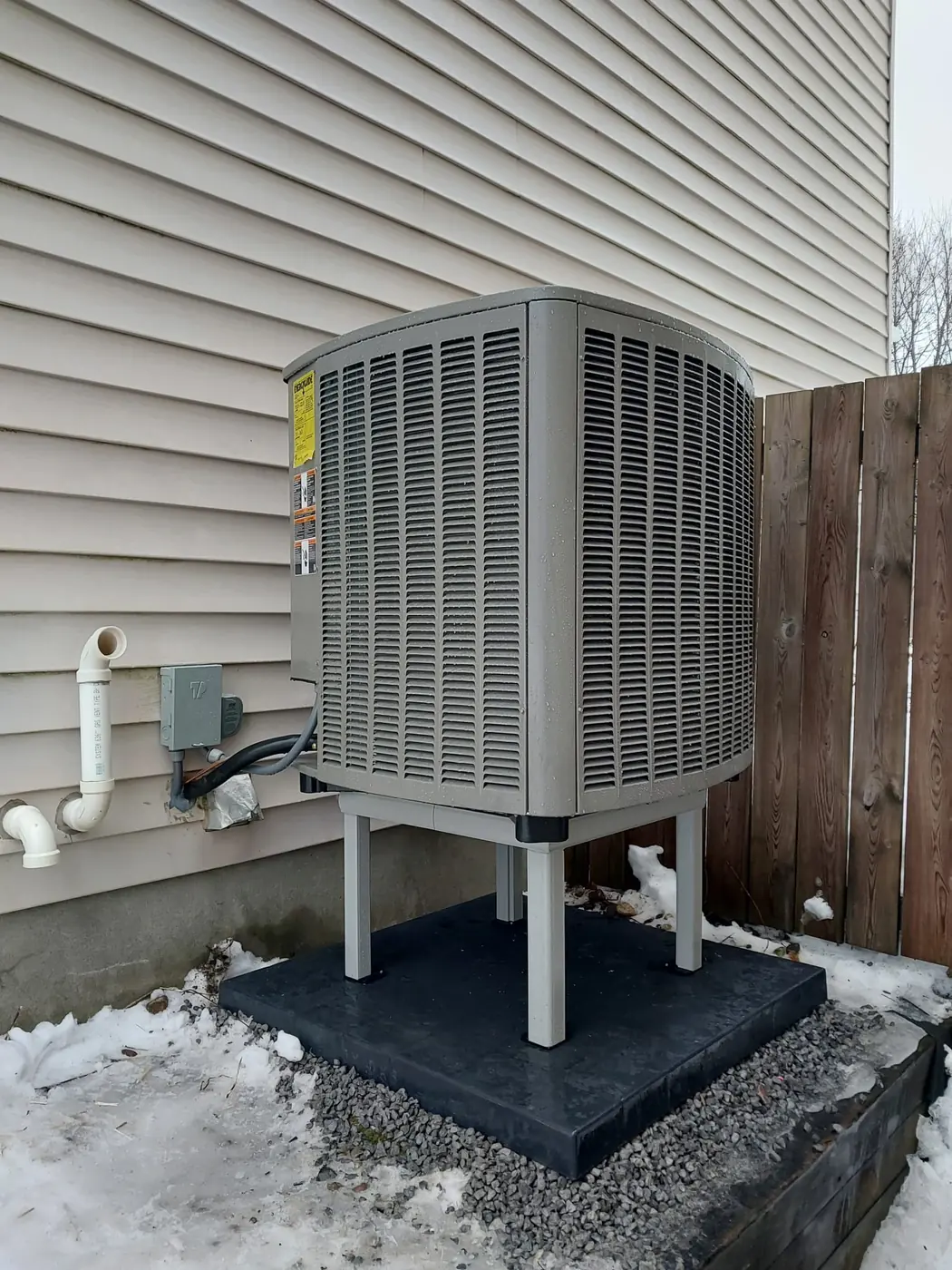
The HRS replacement rule is clear.
The current Home Renovation Savings heat-pump stream excludes homes with an existing heat pump used for space heating. Replacing that system does not qualify, even when the old heat pump is very inefficient or several decades old. The official help page specifically addresses very old heat pumps and confirms the exclusion.
We recommend flagging an existing heat pump before requesting a rebate estimate. A quotation that lists a rebate is still a quotation; it cannot change the program’s residence requirements. Ask the contractor to explain the eligibility basis before you compare the proposed net prices.
First, establish what is actually installed.
An outdoor cabinet beside a furnace can be a central air conditioner or a heat pump. Its appearance alone does not settle the question. Start with the outdoor model number, the indoor equipment label, the thermostat configuration and any previous installation invoice. Give those records to the contractor and ask them to identify the complete system.
Do not open electrical compartments or attempt to test heating operation yourself. A contractor can verify the equipment and explain whether the outdoor unit is designed and configured to provide space heating. If the previous owner described everything as “the AC,” that informal label is not enough to determine the program pathway.
This is especially helpful after buying a home. The real-estate listing, maintenance stickers and thermostat brand may each tell only part of the story. Keep a short written equipment summary so every contractor works from the same starting point.
Replacing an air conditioner is a different project.
A home with a conventional air conditioner and a furnace has a different starting point from a home with an existing space-heating heat pump. An eligible first heat-pump installation may be worth checking through HRS, subject to the home, fuel, contractor and exact equipment requirements. Approval is required before installation.
When comparing the options, ask for separate descriptions of what happens to the furnace, indoor coil, controls and outdoor equipment. “Replace the AC with a heat pump” does not describe enough of the job to understand winter operation or the installed system match.
For a replacement project that is potentially eligible, the useful question is how the new system will serve the home. A rebate headline cannot tell you whether upstairs bedrooms receive enough airflow, whether the existing furnace is compatible or how backup heat will operate. Keep those design questions in the discussion alongside the program check.
A component swap is not a new eligible installation.
HRS also states that replacing only one component of a mini-split or multi-split, or adding a new indoor unit, is not eligible. A failed outdoor compressor, a damaged indoor head or an expansion to another room should therefore be quoted on its actual scope.
Ask for a clear explanation of which existing components can remain, which must change and why. Compatibility, parts availability and warranty coverage are separate questions from rebate eligibility. A recommendation to replace more equipment should be supported by those project facts, rather than an assumed incentive.
Compare repair and replacement on the same basis.
If the immediate problem is a breakdown, request a diagnosis before treating replacement as the only option. A repair estimate should identify the fault, the proposed repair, what is included and any meaningful uncertainty. A replacement estimate should explain the complete installation scope and the warranty attached to the new equipment.
We suggest comparing the decisions over a period that matters to you. Someone planning to remain in the home for many years may weigh a new warranty and improved comfort differently from someone preparing to sell. Neither decision needs an invented rebate to make sense.
Use the same comfort requirements for both options. Record rooms that are difficult to heat or cool, operating noise that bothers you and any concerns about backup heating. A low repair price may be attractive, but it will not necessarily address the layout problem that caused the complaint. A new system should explain how it would.
Build the budget without an unconfirmed incentive.
For an excluded replacement, compare the full installed price, taxes, electrical allowances, removal work and financing cost. Keep estimated operating savings separate from the upfront purchase. Ask how those savings were calculated and what assumptions were used for weather, energy prices and your existing equipment.
If someone proposes a different support program, request its current official eligibility page and a project-specific explanation. Rules from a first-installation rebate should never be carried into a replacement estimate simply because the equipment has the same technology name.
For an Ottawa-area home, we can assess the existing system through AirZone and explain the practical replacement options. Start by telling us that a heat pump is already installed. That lets the assessment focus on comfort, compatibility and a realistic budget from the beginning.
Questions homeowners ask.
Can an old heat pump qualify for HRS replacement rebates?
No. The current HRS heat-pump stream excludes existing space-heating heat-pump replacements, including very old systems.
How can I tell whether my outdoor unit is a heat pump?
Record its model number and ask a qualified contractor to identify the system. Cabinet appearance or the previous owner’s description alone is not sufficient.
Sources behind this article.
PUT THE GUIDANCE TO WORK
Find the next step for your home.
Check the Ontario program route first, then use the buying tools to organize your questions. Ottawa-area homeowners can choose an AirZone assessment when they are ready.