
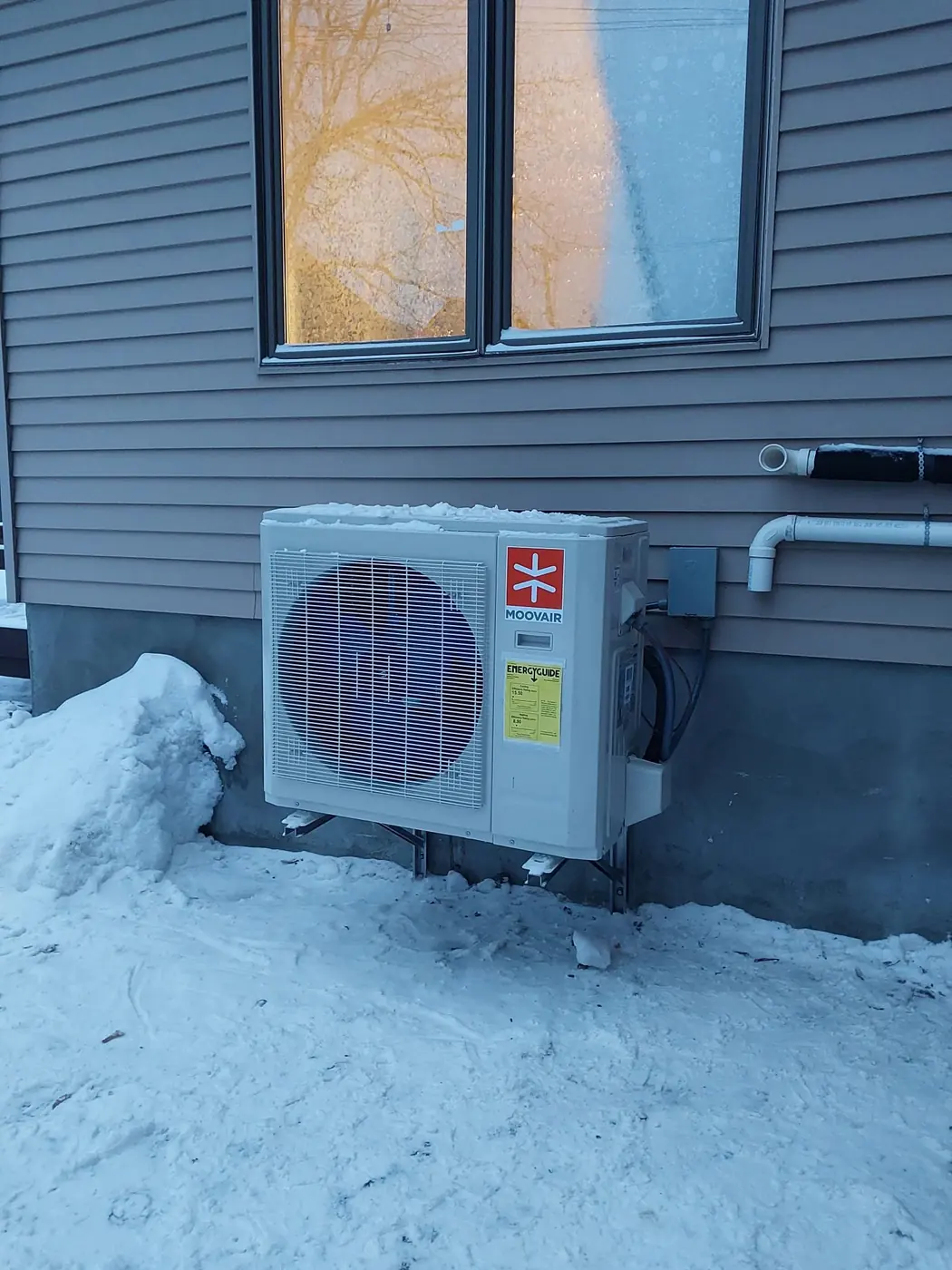
Why a heating system sometimes needs to melt frost
During heating, the outdoor coil extracts heat from outdoor air. Its surface can become cold enough for moisture to collect as frost. The system periodically changes operation to warm the coil and clear that buildup. Defrost is part of air-source heat-pump operation; seeing it happen does not, by itself, indicate a failure.
Natural Resources Canada describes different ways equipment decides when to defrost. That is why a neighbour’s cycle frequency is a poor benchmark for your system. Weather, moisture and the equipment’s control design matter. We would not judge an installation using a universal number of cycles per hour.
Watch what happens before, during and after
Start with the whole sequence. Note whether there was visible frost before the change, whether some of it cleared, and whether normal heating resumed afterward. A single photograph taken halfway through the process can miss the most useful evidence.
Manufacturer operating instructions describe temporary heating interruptions and water vapour from the outdoor heat exchanger during defrost. Certain systems also change indoor fan or vane behaviour. Your own manual is the better reference for the displays and operating changes you should expect.
If you see a brief white plume without a burning smell, the manual may identify it as water vapour. Smoke, a burning smell or an electrical concern requires a different response: stop using the equipment if you can do so safely and contact the appropriate service or emergency provider. Do not approach an unsafe unit to investigate.
The useful distinction is whether the ice clears
Light frost that develops and clears is different from a unit that stays encased in hard ice. Contact your contractor if substantial ice remains, the fan appears obstructed, heating does not recover or a fault message appears. Share what you observed rather than guessing which component has failed.
An ice problem can also involve the surrounding installation. Look from a safe distance for roof runoff falling onto the equipment, snow piled against it or water accumulating beneath it. These observations help the contractor decide whether to inspect drainage, location or equipment operation.
Do not chip the coil, reach through the grille, pour hot water into the cabinet or force a manual defrost using hidden controls. A service visit should establish the cause and the approved remedy. Removing visible ice without addressing why it formed may leave the problem unresolved.
After a snowfall, protect the space around the unit
Keep the surrounding area available for airflow and service access. Clear loose snow from the approach and nearby ground carefully, without striking the equipment or packing snow into its base. Follow the model’s instructions for any cleaning or snow removal at the unit itself.
If a plow, shovel or snowblower normally pushes snow toward the heat pump, change that routine before the next storm. Tell everyone who clears the property where the equipment is located. A clear photograph showing the unit and its surroundings can make that conversation easier.
A heat pump used for winter heating needs an installation that accounts for expected snow conditions. The appropriate support height and any approved weather protection depend on the model and site. Do not add a homemade cover or enclosure without having the contractor confirm that it preserves the required airflow.
Give the service team a short observation log
The most helpful report connects the outdoor event to what happened indoors. Record the approximate time, outdoor conditions, thermostat message, whether rooms became colder and whether heating returned. Photograph visible ice safely and capture the full error code, if one appears.
If the behaviour repeats, note the pattern across more than one occurrence. You do not need to stand outside timing every cycle. A few clear observations usually give the service team a better starting point than a description such as “it sounded strange.”
Ask your installer to explain normal defrost behaviour during the installation handover. Keep that explanation with the operating manual and backup-heating instructions. Our cold-climate guide covers the separate question of how a system is selected for Ontario winter heating.
Questions homeowners ask.
How long should my heat pump stay in defrost?
Use the operating manual and installer’s guidance for your exact system. There is no single duration that applies to every model and weather condition. Call for service if heating does not recover, a fault appears or significant ice remains.
Should I turn off my heat pump whenever I see frost?
Frost can be part of normal winter operation. Follow your model’s instructions and observe whether its defrost process clears the coil. Persistent heavy ice, obstructed moving parts or an unresolved heating problem needs professional attention.
Does water vapour mean the outdoor unit is burning?
Manufacturers describe water vapour during defrost as an expected possibility. A burning smell, smoke or another sign of danger should not be treated as normal defrost. Move away and contact the appropriate service or emergency provider.
Sources behind this article.
PUT THE GUIDANCE TO WORK
Find the next step for your home.
Check the Ontario program route first, then use the buying tools to organize your questions. Ottawa-area homeowners can choose an AirZone assessment when they are ready.